Excessive noise at work causes serious hearing damage and increases stress for employees. Conducting a proper noise survey reading allows you to protect your team and meet strict health and safety requirements. You need to understand how sound is measured, the tools required, and how to interpret the data you collect. This article breaks down the acoustic assessment process so you can apply these principles directly to your workplace.
Fundamentals of Sound Measurement
Sound travels in waves and creates variations in air pressure. We measure these pressure variations in decibels, a logarithmic scale that represents human hearing sensitivity. Because the human ear responds differently to different frequencies, acoustic professionals apply an ‘A-weighting’ filter to represent what we actually hear. You also need to track the ‘C-weighting’ for sudden, peak noises like heavy machinery drops. A basic grasp of these scales helps you understand the true impact of industrial noise on human ears. A slight numerical increase in decibels represents a massive multiplication of sound energy, which is why accurate measurement remains highly critical.
Equipment for Accurate Noise Surveys
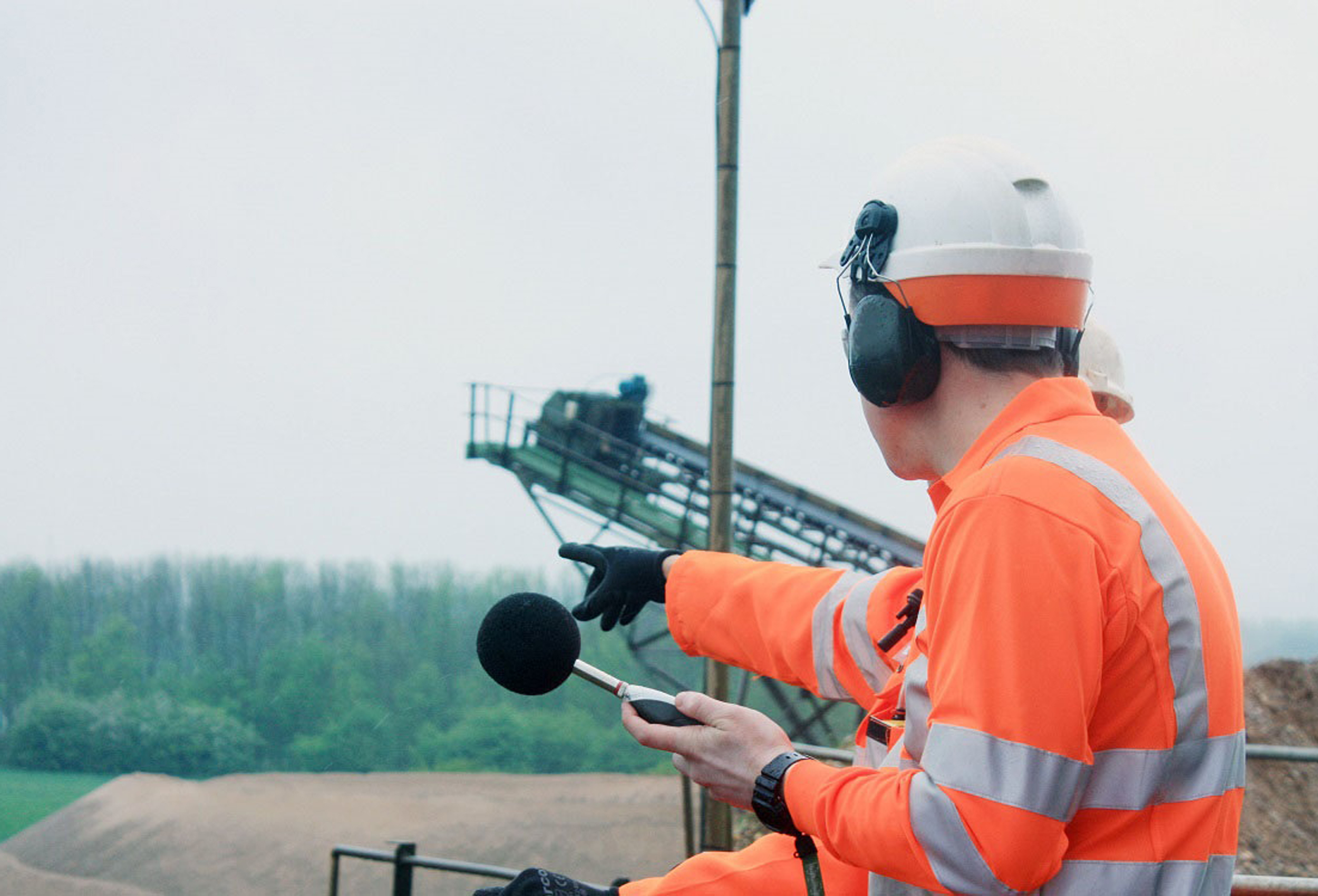
You cannot rely on smartphone applications for a professional noise survey reading. You must use Class 1 or Class 2 sound level meters that comply with international standards. Class 1 meters offer higher precision for laboratory and boundary noise assessments, while Class 2 meters provide sufficient accuracy for standard occupational noise surveys. For workers moving around a factory floor, you should issue personal noise dosimeters. These small devices attach to an employee’s collar and record their individual noise exposure over a full working shift. Always calibrate your equipment with an acoustic calibrator before and after every single measurement session to guarantee the validity of your data.
Interpreting Noise Data
Collecting the figures is just the first step. You must translate that raw data into a clear picture of daily exposure. The primary metric you will look at is the daily personal noise exposure level. This figure calculates the total noise an employee absorbs over a standard eight-hour day. If a worker spends two hours near a loud compressor and six hours in a quiet office, the dosimeter averages this out. You must compare these exposure levels against established legal limits. High peak sound pressure levels, which happen in a fraction of a second, require separate evaluation because they can cause immediate, irreversible hearing damage independently of the daily average.
Regulatory Standards and Compliance
The Control of Noise at Work Regulations 2005 heavily regulate workplace sound levels in the UK. The law dictates specific action values that force employers to intervene. The lower exposure action value is 80 decibels, at which point you must provide information and optional hearing protection. The upper exposure action value hits at 85 decibels, requiring mandatory hearing protection and strict noise control measures. An absolute limit exists at 87 decibels, accounting for any hearing protection worn. Falling short of these legal duties exposes your staff to permanent harm and leaves your business vulnerable to severe legal action and financial penalties.
Best Practices for Noise Survey Reading
A successful survey requires careful planning and execution. Start by observing your workplace during normal operations to identify obvious hazard zones. Document the exact locations of your measurements, the specific machinery running, and the environmental conditions at the time. You must measure noise at the operator’s ear level to get a true reflection of their experience. Speak with your employees during the survey, as they often provide valuable context about intermittent loud noises you might otherwise miss. Schedule regular repeat surveys, especially after installing new equipment or altering the layout of your facility, to maintain a safe environment.
Mastering Acoustic Assessment
Taking an accurate noise survey reading requires patience and the right methodology. By investing in proper equipment and understanding the legal frameworks, you create a safer, healthier workplace for everyone. Keep your calibration records updated and use your findings to implement physical noise reduction strategies, rather than relying entirely on ear defenders. Taking control of your acoustic environment prevents long-term health issues and builds a more productive workforce.